


Interlocking rings describing an organisation and its governance boundary

Reliable AI begins with control.

Dipp AI Technologies is on a mission to close the gap between an AI's advanced reasoning capabilities and an enterprise's ability to trust it with real work: verifiable, cost-disciplined, and in control of their own data.

The company pioneered Human-in-the-Role — binding authority to a role before execution rather than reviewing it afterwards — and built Orcher, the agentic control plane, as the infrastructure that makes this possible. Orcher delivers that idea alongside disciplined economics and provable data control, at enterprise scale. Every verified action along the way compounds into Dipp Intelligence, a permanently owned asset.

Interlocking governance rings describing an organisation and its accountability boundary
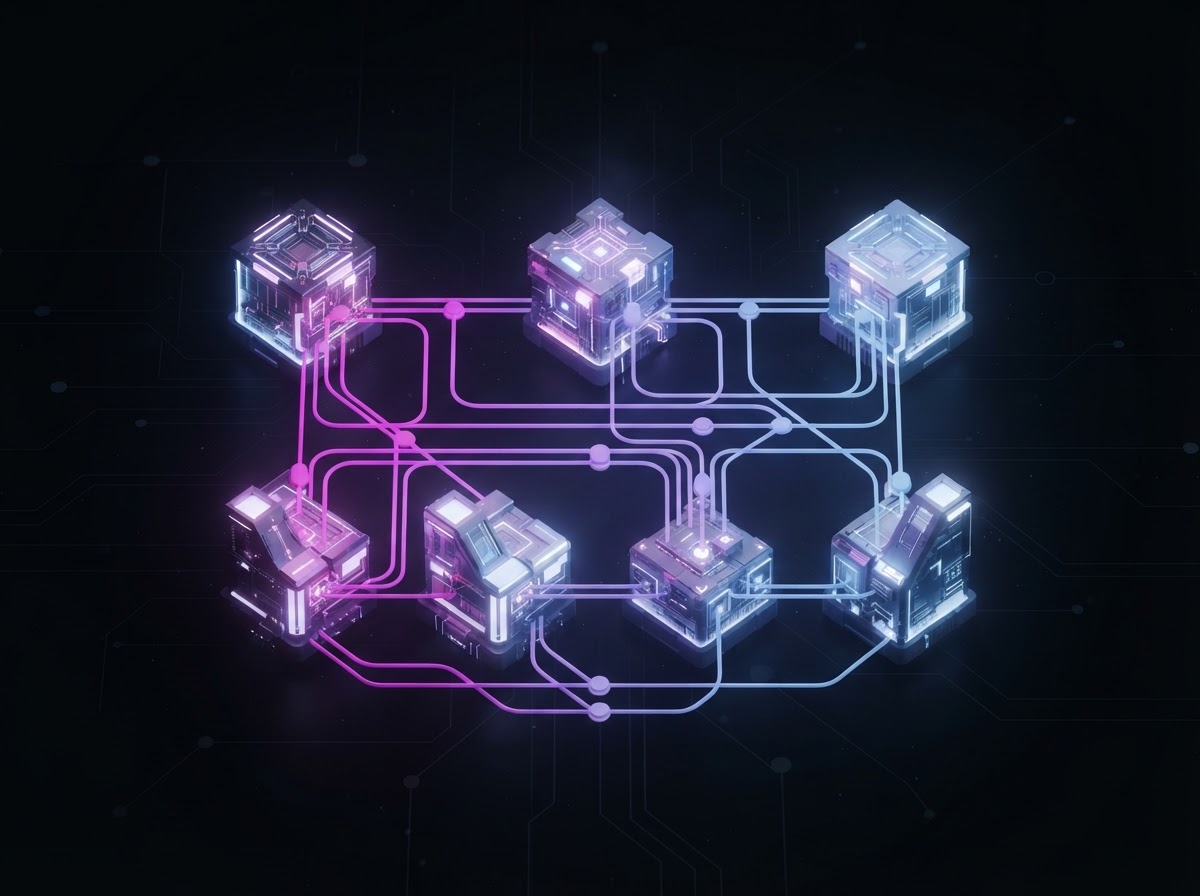
The Orcher architecture, in seven components: the four at top verify and record every directive in sequence, while the three below operate continuously alongside that sequence, at enterprise scale.
Dipp AI Technologies headquarters, One Manhattan West, New York

Headquarters: New York, NY

The company

Orcher

All seven components operate as one system: four verify and record every directive in sequence, three operate continuously alongside that sequence, at enterprise scale.

Explore Orcher

Human-in-the-Role

Human-in-the-Role, a direct departure from the industry default of Human-in-the-Loop, delivered alongside disciplined economics and provable data control at enterprise scale.

Explore Human-in-the-Role

Dipp Intelligence

Every verified directive compounds into Dipp Intelligence, the firm's own permanently owned library of execution paths.

Explore Dipp Intelligence

Why Dipp AI exists

Model capability moved faster than enterprise accountability.

Enterprises do not need another model interface. They need an independent layer that decides which model should act, what data it may use, what authority it carries, how much it may spend, and what evidence remains after execution.

Dipp AI was formed to build that layer. Orcher sits between autonomous systems and systems of record, enforcing the seven controls required to make AI dependable in critical decisions and workflows.

Dipp AI Research · September 6, 2026

Models advance. Enterprise control must endure.

Our September commentary examines GPT-6 Astra, Claude Fable 5.1, Claude Mythos 5.1 and Muse Spark 1.3 through one enterprise question: can advanced reasoning be trusted with real work—verifiable, cost-disciplined, and in control of the enterprise’s own data?

Choice without surrendering control

Frontier APIs, open-weight families such as Llama, Qwen, DeepSeek, Mistral and Gemma, and enterprise-tuned models belong behind the same authority and evidence requirements.

A neutral plane across compute

AWS, Microsoft Azure and Google Cloud; neoclouds such as CoreWeave, Lambda and Crusoe; private infrastructure. The destination may change. The enterprise’s boundary and budget must not.

Seven controls. Compounding intelligence.

Cost Governance chooses the sufficient route. The Data Control Gateway governs egress. Observability traces the run. Human-in-the-Role binds authority, while verified execution compounds into Dipp Intelligence.

Named release examples follow the September commentary. Model families and compute providers are ecosystem examples, not a claim of certified integrations or universal availability.

Read Frontier Autonomy Needs a Control Plane →

Our strategy

Dynamic model routing is the mission in practice.#

Binding a platform to one heavy frontier model wastes tokens and leaks proprietary data. Dipp AI's strategy — and the reason Orcher's seven components exist — is intelligent routing: decouple orchestration from any single provider, match each task to the cheapest model that can carry it, and keep prompts and data inside the enterprise's own tenant boundary.

DIPP AI / ORCHER

Seven components. One enterprise-owned control plane.

01 + 02 / AUTHORITY

A role-bound directive

Intent, named professional, permitted actions and systems of record.

06 / COST GOVERNANCE

Dynamic model routing

Select the least costly sufficient model within the task’s stakes, latency target and spend ceiling.

Explore Cost Governance

05 / DATA CONTROL GATEWAY

Boundary before egress

Region, redaction, retention and training-exclusion requirements determine which destinations qualify.

Frontier reasoning

  • GPT-6 Astra
  • Claude Fable 5.1
  • Claude Mythos 5.1
  • Muse Spark 1.3

Models discussed in Dipp AI Research · September 6, 2026

Open-weight & private

  • Llama
  • Qwen
  • DeepSeek
  • Mistral
  • Gemma
  • Enterprise-tuned models

Model families · exact versions and licences assessed per deployment

Compute destinations

  • AWS
  • Microsoft Azure
  • Google Cloud
  • CoreWeave
  • Lambda
  • Crusoe
  • Private infrastructure

Hyperscalers, neoclouds and enterprise infrastructure

03 / Logic Scrubber

Verify proposed actions before commit.

04 / Immutable Audit Ledger

Preserve the decision and refusal evidence.

07 / Observability

Trace cost, latency and outcomes across routes.

Illustrative routing architecture, not a live connection status or an exhaustive integration catalogue. Provider availability, model access and deployment readiness are confirmed during a technical briefing.
01

Decoupled orchestration

Switch providers in a week, not a quarter.

An orchestration layer sits in front of every AI task rather than inside one vendor's SDK. Directives, roles, policy and evidence live in Orcher, so a provider change is a routing-table change — a week of work rather than a quarter of re-platforming — and no model vendor becomes the system of record for how the enterprise operates.

The protocol stack
02

Task-to-model matching

Roughly 90% of workloads never need the frontier.

Cost Governance routes by the stakes of the action rather than the habits of the developer. Standard, routine queries — roughly nine in ten workloads — go to cheaper open-weight or small in-house models; expensive frontier models are reserved for genuinely complex, high-reasoning tasks. Across 400-plus models and 70-plus providers the price spread is 4,500× (Vol. I, p.25), so the routing decision is the economics.

Cost Governance
03

Private tenant boundaries

Providers never learn from your interaction data.

The Data Control Gateway forces data and prompt histories to stay inside the company's own cloud environment — a private tenant, in-region — and verifies training exclusion and the data boundary on every call before a token leaves. Using frontier capability never means donating enterprise interaction data to the firm that sells it back.

Data Control Gateway

Proof points

What the strategy is accountable to.#

Cost, token waste, latency and auditability are the four numbers we hold the routing strategy to — and the ones enterprise buyers ask us about first.

Cost

4,500×

price spread across 400+ models and 70+ providers

The spread between the cheapest sufficient model and the frontier default is the entire economic case for routing. A directive sent to the wrong class does not fail — it just costs orders of magnitude more than it had to.

Vol. I, p.25

Token waste

~90%

of workloads never need a frontier model

Routine classification, extraction, summarisation and drafting clear on in-house or open-weight classes. Reserving frontier capacity for genuinely complex work is what turns AI spend from a run-rate into a budget.

Dipp AI routing model · Vol. I, p.25

Budget

68%

of enterprise AI programmes run over budget

Overrun is a control failure, not a forecasting failure. Cost Governance applies a ceiling per role and per directive and halts loops at the step boundary rather than at the invoice.

Vol. I, p.9

Latency

10×

faster on routine classes than a frontier default

Cheaper classes are also materially faster. Routing the routine nine-tenths off the frontier shortens the median directive as a side effect of the economics.

Indicative class latencies, Orcher routing table

Auditability

28%

of enterprises can trace an agent action end to end today

Every routing decision Orcher makes — class chosen, alternatives considered, ceiling applied, boundary attested — is hashed into the same evidence chain as the committed action, so the economics are as auditable as the outcome.

Vol. I, p.6

Portability

1 week

to change providers, not a quarter of re-platforming

Because orchestration is decoupled from any vendor SDK, a provider change is a routing-table change. Directives, roles, policy and evidence stay in Orcher.

Dipp AI protocol stack contract

By the numbers

Dipp AI at a glance

Founded

2026

Headquarters

New York

One Manhattan West, 51st Floor, New York, NY, United States

Product

Orcher

The agentic control plane

Components

7

Across two layers

Research

Vol. I

Published August 2026

Origin story

The idea formed in March 2025 inside Fortune 100 AI platform work; the company was founded in July 2026 to close the gap between advanced AI reasoning and enterprise trust. Read how Dipp AI started and who is building it.

How we work

The operating principles behind the product.

Every engagement starts with one role, in one department, run to a provable outcome. Breadth is earned by evidence, not by roadmap.

Evidence-led

Every public number carries a citation and a date. Internal findings are labelled as internal analysis, not independently verified.

Provider-neutral

No model, no resold capacity, no incentive to approve an action that should have been refused.

Trust-gap first

We design for industries where advanced AI reasoning must become verifiable, cost-disciplined work under enterprise data control.

Small and senior

The people who answer your questions are the people who wrote the component.

Vol. I · p.36The seven components of Orcher

Dipp AI Technologies, Inc. is headquartered at One Manhattan West, 51st Floor, New York, NY, United States. Vol. I of Dipp AI Research was published in August 2026; correspondence, corrections, and counter-citations are welcome at comms@dippai.com.

DIPP AI TECHNOLOGIES / ORCHER

Join us. Shape the future of governable AI.

Build with the founding team. Make advanced AI trustworthy for real work, across industries.

01

Verifiable work

02

Cost-disciplined execution

03

Your enterprise’s own data

View open roles

Careers

Fifteen roles are open across engineering, applied AI, research, product, design, trust and go-to-market. Follow Dipp AI on LinkedIn to see them as they post.