
Orcher · Protocols
MCP, A2A, ACP — and the layer beneath them
Protocols standardize how agents connect and converse. They do not answer whose authority an action carries, nor whether it reconciles with a system of record. That question belongs to the control plane.
Vol. I · p.15, p.17
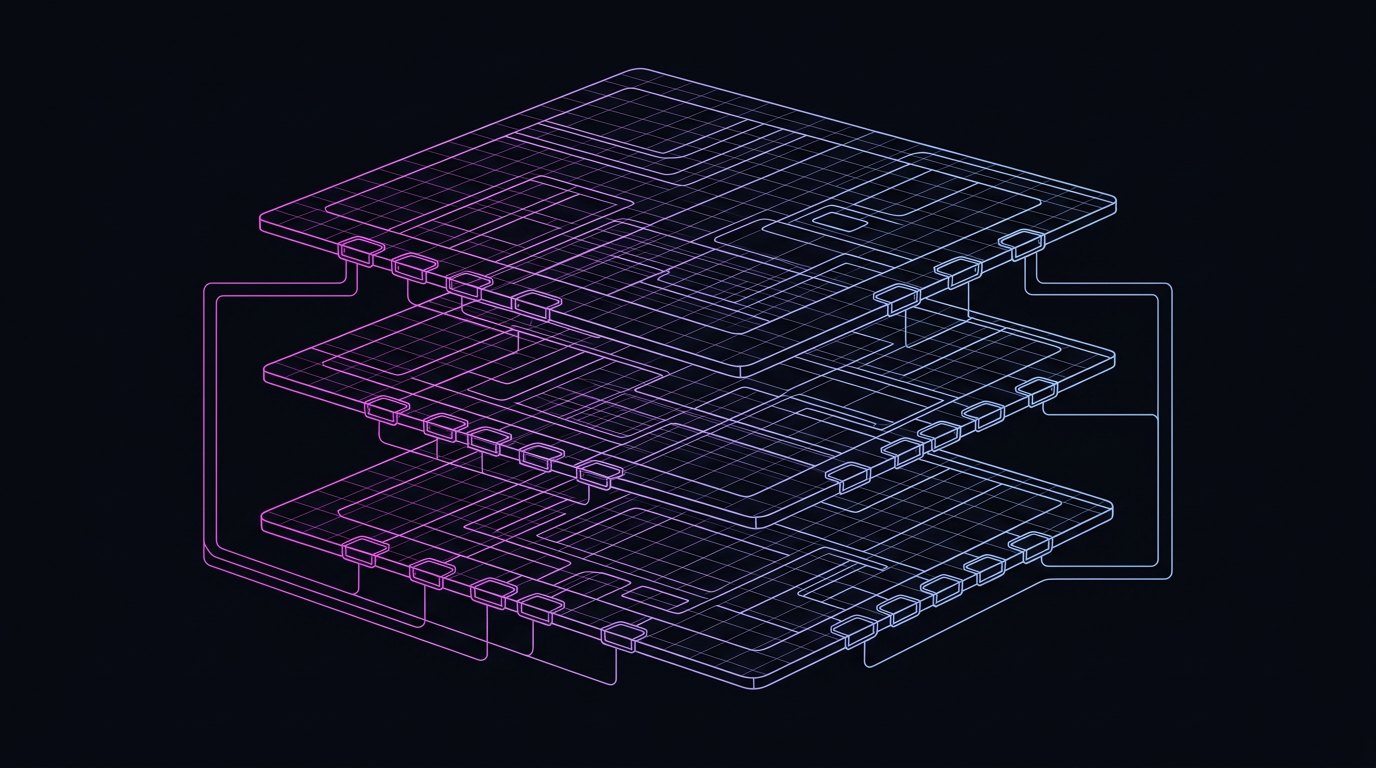
Figure · Orcher™
Protocol stack — where Orcher sits
FIG. P15-01
Authorization layer
ORC
Orcher
Per-directive authority, pre-commit verification, hashed evidence, cost and data control.
Interoperability is not authorization. A reachable tool is not an authorized action.
Interoperability layer
MCP
Model Context Protocol
97M monthly SDK downloads; donated to the Agentic AI Foundation.
A2A
Agent-to-Agent v1.0
150+ organizations; agent cards and delegation semantics.
ACP
Agent Communication Protocol
IBM, REST-native.
The three protocols
Connection is solved. Authorization is not.
Protocol adoption accelerated faster than any governance standard in the same period, widening precisely the gap Orcher exists to close.
Model Context Protocol
MCP
Standardizes tool and context access between models and systems. Donated to the Agentic AI Foundation; roughly 97M monthly SDK downloads and more than 9,400 public servers, with 41% of surveyed enterprises running it in production.
Defines what a model can reach. Says nothing about whose authority the reach carries.
Agent-to-Agent
A2A
Reached v1.0 with 150+ participating organizations. Agent Cards advertise capability and delegation semantics so agents can discover and hand off to one another.
Describes delegation. Does not verify that the delegating party was ever authorized.
Agent Communication Protocol
ACP
IBM's REST-native message protocol for agent interoperability, designed to fit existing enterprise HTTP infrastructure.
Carries the message. Carries no binding to a named human or a system of record.
Adoption
The ecosystem moved first
97M
monthly MCP SDK downloads
9,400+
public MCP servers
41%
of enterprises running MCP in production
80%
of Q1-2026 enterprise apps embedding an agent
Figure · Orcher™
Protocol adoption in 2026
FIG. P15-02
9,400+
public MCP servers
41%
of MCP deployments already in production
80%
of Q1-2026 enterprise apps embed an agent
<2 days
to bring a system under Role Identity Fabric
A layer above orchestration
Coordination layers need something to stand on.
Mycelium — Cisco Outshift's contribution to AGNTCY under the Linux Foundation — and CASA, Continuous Agent Semantic Authorization, are building coordination and semantic policy above the protocol layer. Both are necessary. Neither binds an action to a named human's revocable authority, and neither verifies a proposed write against a system of record before it commits.
Orcher sits underneath coordination layers rather than competing with them. Speak every protocol; trust none of them with authority. Bringing a new system under the Role Identity Fabric takes under two business days.
Speak every protocol. Trust none of them with authority.
Orcher interoperates across the stack while keeping authorization, verification, and evidence in one governed place.