
Product

Orcher

The agentic control plane. Provider-neutral, role-bound, and evidence-producing by construction — the layer between your professionals' authority and the models that execute on it.

Seven components · Two layers · One verified execution cycle

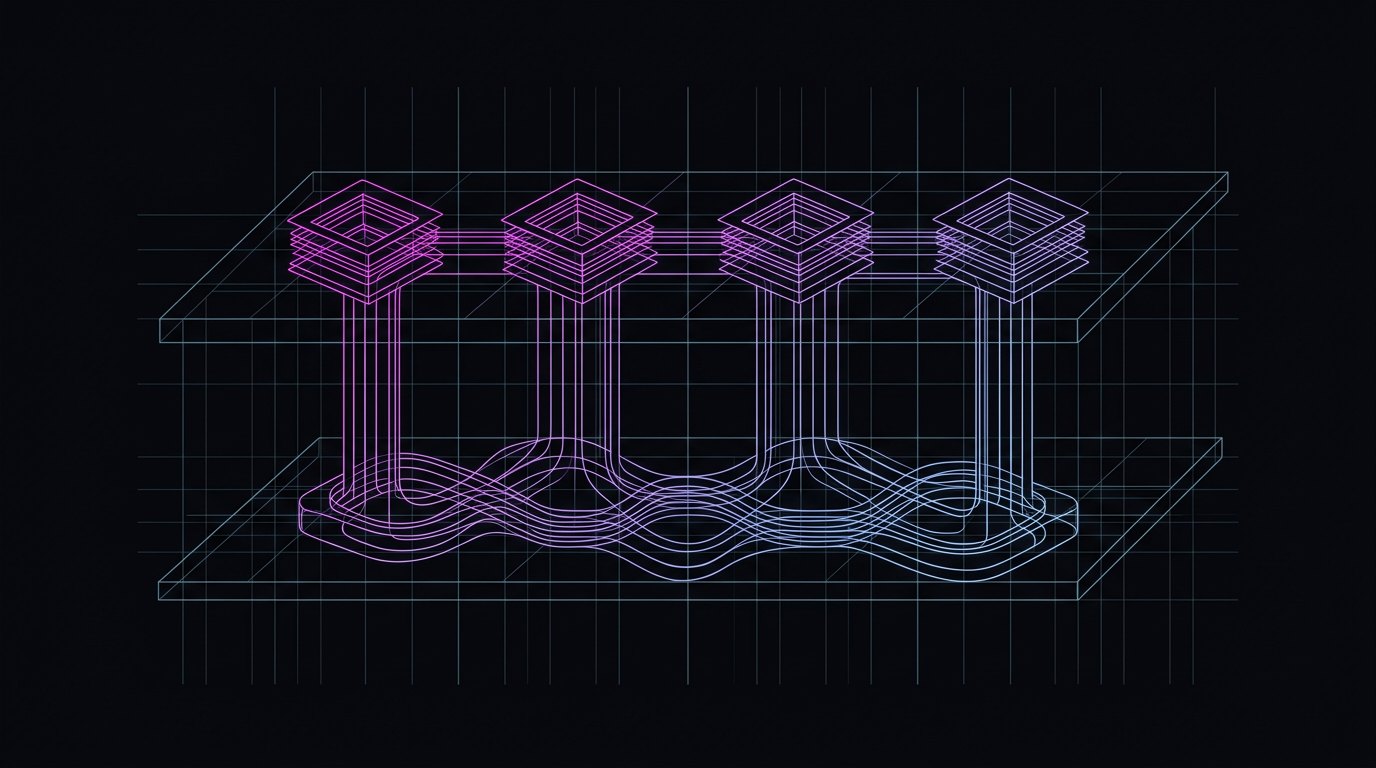
Orcher — seven components, two layers

Fig. ORC-02

Layer 1 · Accountability

C0

Directive Interface

Where intent enters, attributed.

C1

Role Identity Fabric

Authority bound to a person.

C2

Logic Scrubber

Pre-commit verification.

C3

Immutable Audit Ledger

Hash-chained evidence.

Layer 2 · Operations

C4

Data Control Gateway

Residency and redaction.

C5

Cost Governance

Routing and spend ceilings.

C6

Observability

Cross-provider execution telemetry.

Model-agnosticDeploys beside existing agentsNo re-platforming

Full architecture

The whole control plane, in one view.

Directive in, four sequential gates, three continuous controls, a verified commit to your systems of record, and evidence that outlives the run.

Orcher — full architecture, intent to evidence

— / 13
100%

Layer 1 — sequential, gating

Layer 2 — continuous

GovernedintentSCOPEDLAYER 1 — SEQUENTIAL, GATINGC1Directive InterfaceTurns open-ended promptinginto governed workC2Role Identity FabricGives autonomy anaccountable identityC3Logic ScrubberMakes policy executableC4ImmutableAudit LedgerConverts activity into…Any gate fails → cycle halts. Nothing partial is written.LAYER 2 — CONTINUOUS, NON-BLOCKINGC5Data Control GatewayHolds the data perimeter.ResidencyC6Cost GovernancePuts an economic boundaryaround autonomy. Ceilings per…C7ObservabilityOne control view across everymodelPROVIDER-NEUTRAL EXECUTIONFrontier modelsAgent frameworksInternal modelsTools & RPASystemsof recordCOMMIT

drag · pinch or scroll to zoom · double-tap to reset

Guided walkthrough

What the seven components enforce

Press Start walkthrough, or select any node, to step through the seven components. Each one closes a different gap that keeps enterprises from scaling agents: C1 scopes the work, C2 binds it to accountable identity, C3 makes policy executable before commit, C4 turns activity into defensible evidence, and C5–C7 hold data residency, cost and cross-provider visibility continuously. Together they are Dipp AI's position — Enterprise Superintelligence that is governable by construction.

Source: Vol. I, p. 19 — Component Schematic v1 — the seven components
One verified execution cycle: authority in, four gates in sequence, three continuous controls alongside, a commit to your systems of record, and evidence that outlives the run.
Orcher's two layers: gating components above, continuous components below
Seven components across two layers. Layer 1 gates execution; Layer 2 runs continuously.

Layer 1 — sequential, gating

Four gates decide whether an action may commit.

Each runs in order. A failure at any gate halts the directive; nothing partial is written.

Layer 2 — continuous, non-blocking

Three controls govern the run itself.

Data control, cost, and observability operate for the life of the directive rather than at a single checkpoint.

Orcher's two layers: sequential gating and continuous governance
Vol. I · p.13Orcher's two layers: sequential gating and continuous governance

Why it matters

The gap Orcher closes

92%

have no visibility into agent identities

Vol. I, p.6

86%

cannot enforce policy against them

Vol. I, p.6

68%

of AI programs are over budget

Vol. I, p.9

5%

of CISOs could contain a rogue agent

Vol. I, p.8

Execution path

What happens between a sentence and a committed action.

Orcher does not replace the agents, the orchestration framework, or the models already in the estate. It sits in front of them and decides, per directive, whether the work may proceed — and writes down what it decided.

  1. 01

    Directive received

    Plain-language intent arrives with the issuer's identity attached. Anonymous directives are refused at the door.

  2. 02

    Role resolved and bound

    The Role Identity Fabric resolves the professional's current entitlements and binds them cryptographically to this cycle.

  3. 03

    Proposed action verified

    The Logic Scrubber checks the plan against systems of record — eligibility, policy, licensure, limits — before anything is written.

  4. 04

    Data boundary applied

    The Data Control Gateway redacts, routes, and enforces residency for every payload leaving the estate.

  5. 05

    Execution and metering

    Cost Governance selects a tier within the ceiling in force; Observability streams the run across whichever providers are involved.

  6. 06

    Commit and hash

    The result and the full decision trace are written to the Immutable Audit Ledger and retained as Dipp Intelligence.

Deployment

How Orcher lands in an existing estate.

No re-platforming, no model migration, no rewrite of the agents already in production.

Scope

Pick one workflow where a named professional already signs off today.

Bind

Map the roles and entitlements that workflow depends on into the identity fabric.

Verify

Point the Logic Scrubber at the systems of record the decision is judged against.

Prove

Run in shadow, compare refusals to human judgment, then move the gate in front of commit.

See the schematic, then bring a workflow.

The Component Schematic v1 traces a single directive from plain language through to a hashed record and a retained intelligence asset.